
Choosing the right eCommerce platform is one of the most important decisions before building an online store.
Many business owners start by comparing Magento and WooCommerce, because both are popular, flexible, and widely used.
WooCommerce is connected with WordPress, which makes it familiar and easy to start with. Magento, on the other hand, is a stronger eCommerce system for businesses that need more control, scalability, and custom functionality.
So which one should you choose?
The answer depends on your business model, your budget, your product catalog, and your long-term plans.
If you are still comparing several platforms, you can also read our full guide on how to choose the right eCommerce platform for your business.
What Is WooCommerce?
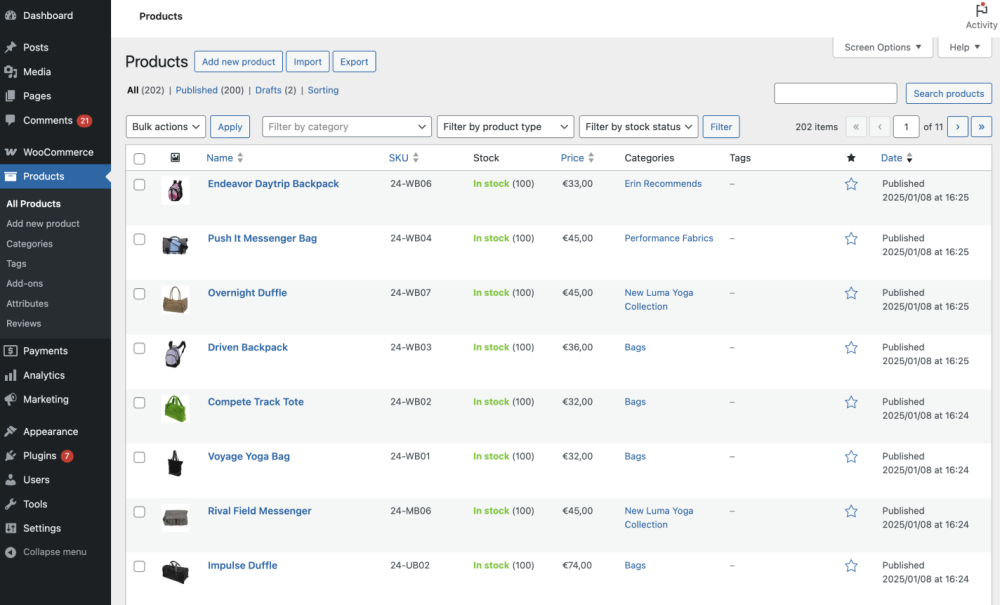
WooCommerce is an eCommerce plugin for WordPress.
That means your website is built on WordPress, and WooCommerce adds online store functionality to it. With WooCommerce, you can add products, manage orders, accept payments, and run a basic online shop.
For many small businesses, WooCommerce is a comfortable starting point because WordPress is simple to manage, has many themes, and offers thousands of plugins.
WooCommerce is often a good choice for:
- small online stores
- businesses that already have a WordPress website
- simple product catalogs
- content-heavy websites with a small shop section
- businesses that want to start with a smaller budget
For example, if you run a small brand, sell a limited number of products, and want a website with blog posts, landing pages, and a basic shop, WooCommerce can be a practical solution.
What Is Magento?
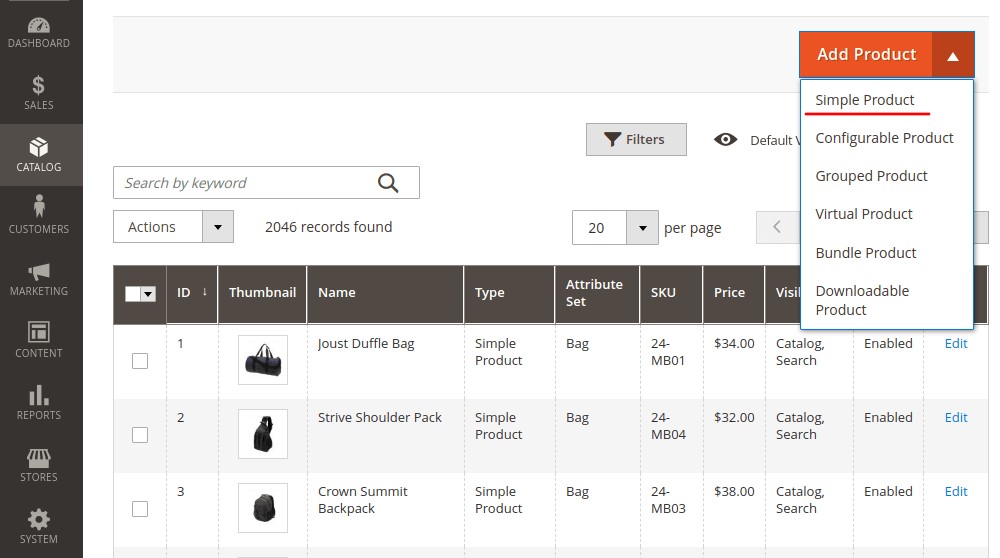
Magento, also known as Adobe Commerce in its commercial version, is a dedicated eCommerce platform.
Unlike WooCommerce, Magento is not just an add-on to a content website. It is built specifically for online selling, product management, pricing, promotions, checkout, customer groups, multi-store setups, and complex eCommerce operations.
Magento is usually a better choice for businesses that need:
- many products or product variations
- custom checkout logic
- advanced shipping and payment integrations
- B2B and B2C functionality
- multi-language and multi-store setup
- customer-specific pricing
- complex promotions
- long-term scalability
Magento usually requires more development and maintenance than WooCommerce, but it gives much more flexibility when the business becomes more serious and complex.
Quick Comparison: Magento vs WooCommerce
| Question | WooCommerce | Magento |
|---|---|---|
| Is it easy to start? | Yes | More complex |
| Is it good for small stores? | Yes | Sometimes too advanced |
| Is it good for large catalogs? | Limited | Strong |
| Is it good for custom business logic? | Limited/depends on plugins | Very strong |
| Is it good for B2B? | Possible, but needs plugins | Stronger |
| Is it easy to manage content? | Very strong | Less content-focused |
| Is it scalable for serious eCommerce? | Medium | Strong |
| Development cost | Usually lower at the beginning | Usually higher |
| Long-term flexibility | Medium | High |
| Best for | Small/simple stores | Growing and complex stores |
When WooCommerce Is the Better Choice
WooCommerce can be the right choice when your online store is simple and your main goal is to launch quickly.
It works well when you do not need complicated product logic, advanced integrations, or custom workflows. It is also useful when content is a big part of your strategy.
For example, WooCommerce may be enough if your business mainly needs:
- a company website with a small shop
- a blog plus several products
- a simple catalog
- standard payment methods
- basic delivery options
- simple discount coupons
- fast launch with a smaller initial budget
WooCommerce can also feel easier for business owners because many people already know WordPress. The admin panel is familiar, and basic changes are usually simple.
But there is one important thing to understand: WooCommerce often becomes more complicated as the business grows.
At the beginning, it may look simple. But later, you may need many plugins for payment, delivery, SEO, filters, product variations, invoices, stock management, marketing tools, and performance optimization.
Too many plugins can make the website slower, harder to maintain, and more difficult to scale.
When Magento Is the Better Choice
Magento is better when your online store is not just a simple website, but a serious eCommerce system.
It is especially useful when you need:
- advanced product management
- configurable products
- customer groups
- B2B and wholesale pricing
- custom discounts and promotions
- multi-store or multi-language structure
- integration with ERP, CRM, accounting, warehouse, or delivery systems
- advanced search and filtering
- flexible checkout customization
- long-term scalability
For example, if your business sells to both retail customers and wholesale partners, Magento can handle different prices, different customer groups, and different buying rules more naturally.
WooCommerce can also do some of these things with plugins, but the more complex the business becomes, the more fragile the setup can become.
Magento is usually more expensive at the beginning, but for the right business, it can save money later because it is built for serious eCommerce from the start.
The Real Difference Is Not “Cheap vs Expensive”
Many business owners think the decision is simple:
WooCommerce is cheaper. Magento is more expensive.
But this is not the full picture.
The better question is:
Which platform matches the way your business actually works?
The wrong platform can create hidden costs. So the platform decision should not be based only on the first development price. It should be based on your business goals.
Comments
Sign in to like or reply to comments.